Thardeep Rural Development Programme
Thardeep Rural Development Programme (TRDP) is a not-for-profit integrated rural development programme. TRDP works with poor and vulnerable segments of society particularly women in the most deprived and remote areas of Sindh Province.
Social mobilization is the foundation of TRDP program. With participation of community institutions, TRDP implements activities under five major themes: 1) sustainable livelihoods, enterprise development and poverty graduation, 2) elementary education with focus on girl’s education, 3) mother and child health, 4) food security and nutrition improvement and 5) disaster preparedness, management, and water & sanitation.
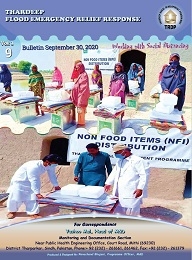
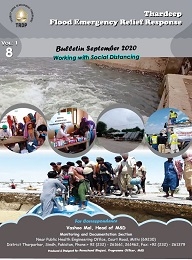
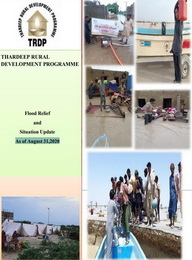
TRDP is implementing emergency response projects for flood affected population in Sindh. For details of relief activities visit TRDP Facebook page, LinkedIn and Twitter.
TRDP is working in 14 districts of Sindh which are Tharparkar, Umerkot, Mirpurkhas, Tando Allahyar, Hyderabad, Matiari, Dadu, Jamshoro, Badin, Sanghar, Thatta, Shaheed Benazir Abad, Khairpur and Jacobabad.
Request for Expression of Interest (4th Call)
PAIDAR – Poverty Alleviation and Inclusive Development Across Rural Sindh
(Microgrants for Setting up Micro/Small Businesses)
TRDP is implementing the Microgrants component of the PAIDAR programme in District Tharparkar, Sindh, with funding support from the European Union and technical guidance from United Nation’s Industrial Development Organization (UNIDO).
Thematic Focus of the Microgrants
Micro-grants would be awarded for a diverse range of viable business ideas in any area that contributes to the objectives of the PAIDAR project. Grants will be awarded as per the application and guidelines compliance. However, grants would not be awarded in these four negative list areas: a) infrastructure/ construction, b) subsistence grants, c) grants for non-productive purposes such as purchase of appliances etc., and d) production of agriculture & livestock.

🚨 ANNOUNCEMENT
Thardeep Rural Development Programme (TRDP) is hiring qualified professionals for:
* Civil Engineers
* Civil / Environmental Engineer Intern – Women Candidates Only
* MIS Officer
🌐 Apply online & view complete job details:
jobs.thardeep.org
📅 Deadline: 2 November 2026
#internship #PakistanJobs #NGOJobs #EngineeringJobs #HyderabadJobs

1 CommentComment on Facebook
Portal per to apply Ki liye show Nahi horha
This content isn't available right now
When this happens, it's usually because the owner only shared it with a small group of people, changed who can see it or it's been deleted.1 CommentComment on Facebook
𝗥𝗼𝘂𝗻𝗱 𝗧𝗮𝗯𝗹𝗲: 𝙎𝙘𝙝𝙤𝙤𝙡𝙞𝙣𝙜 𝙎𝙩𝙧𝙖𝙩𝙚𝙜𝙞𝙚𝙨 𝙖𝙣𝙙 𝘾𝙡𝙞𝙢𝙖𝙩𝙚 𝘾𝙝𝙖𝙡𝙡𝙚𝙣𝙜𝙚𝙨 𝙛𝙤𝙧 𝘼𝙙𝙤𝙡𝙚𝙨𝙘𝙚𝙣𝙩𝙨. Which of the two disasters, drought or flooding, causes stunting among adolescents? Which areas of Pakistan are most severely affected by all four types of disasters? What are the long-term impacts of disasters on school-going children? How well these responses cohere with district governments' own efforts to sustain education? In the aftermath of the 2022 floods, this research is probably one of the most recent studies of its kind, conducted by highly qualified academicians to explore these critical issues.
In a roundtable held at AKU-Faculty of Arts and Sciences (FAS) in Karachi on October 15, 2026, the findings of a three-year research study titled "Schooling Strategies and Climate Challenges Faced by Adolescents" were discussed and recommendations were made. The study was conducted by senior faculty of LUMS and IDEAS, in partnership with the Institute of Development and Economic Alternatives (IDEAS), the Lahore University of Management Sciences (LUMS),University College London (UCL) and Thardeep Rural Development Programme (TRDP).
The findings show that "drought and air pollution are significantly associated with higher stunting. Each additional year of drought a child lives through is associated with a 1.9 percentage-point higher probability of being stunted, and each additional month of polluted air (PM2.5 above 15 µg/m³) with a 0.9 percentage-point higher probability, against an average stunting rate of 38.5% in the sample." "Floods show no association with stunting and heatwaves show an association that, while statistically significant, is effectively zero in size." "This does," the study notes, "not mean floods are harmless for children's development: floods are one-off events, and a single height measurement cannot pick up the growth faltering around a specific flood."
The study findings show, "Almost all climate shocks result in disruption of schooling in terms of lost school days and a significant reduction in the number of learning hours; either due to individual absences or more frequent school closures by the government. In the case of floods, the school closures are prolonged and last up to 3 months in the worst-affected localities. In the case of extreme heat and cold, the closures are shorter (2 to 3 weeks at a time). Recovery from climate shocks encompasses all steps taken by the government, schools, teachers, and communities to reopen schools for adolescents."
Under the heading 'Mitigation and Recovery', the report noted, "The two most prominent forms of support identified by adolescents were economic recovery and education recovery." Following the 2022 floods, the report noted, "The government is credited with the provision of most of this economic support. NGOs are visible and credited in the immediate aftermath of the flooding... The provincial government’s support for rebuilding homes emerges as a key factor in helping mitigate economic and life shocks following the floods in Sindh." The policy implications highlighted in the study are given in the attached slide.
Moderated by Dr. Rabea Malik, Senior Research Fellow at the Institute of Development and Economic Alternatives (IDEAS) and Assistant Professor at the School of Education, LUMS, Lahore, the roundtable brought together experts from academia, government, and international and national development organizations. The speakers at the roundtable included Dr. Hida Majid, Chair of the Department of Economics at LUMS; Dr. Kulsoom Ghias, Dean of the Faculty of Arts and Sciences at Aga Khan University (AKU), Karachi; Koen Geven, Senior Economist, World Bank; Dr. Saher Asad, Economist, World Bank, South Asia Education Team; Miriam Kugele, Director, Environment and Sustainability, AKU; Murtaza Ali Shah, Deputy Commissioner, Dadu; Zain-ul-Abedin Memon, Deputy Commissioner, Hyderabad; Dr. Aftab Alam, Director, Reform Support Unit (RSU), School Education and Literacy Department (SELD), Govt.of Sindh; Allah Nawaz Samoo, CEO, TRDP; Ghulam Mustafa Soomro, Head of Special Projects, TRDP, Yasir Hussain, Director, Climate Action Center (CAC), Karachi; and Ambreen Ahmed, Director,TRC.
#TRDP #UNICEF #AdolescentChampions #NonFormalEducation #ChildFriendlyCommunity #AdolescentEmpowerment #Education
#followers
4 CommentsComment on Facebook
In the aftermath of the 2022 floods, this research is probably the first study of its kind, conducted by highly qualified faculty, to explore the critical issue of long term impact of the climate- induced calamities. TRDP facilitated teams of renowned experts from LUMS and IDEAS in undertaking extensive fieldwork, engaging with diverse segments of society, particularly adolescents, women, and the poor communities, with limited access to mainstream opportunities, services and low connectivity to social media. The findings of the research will help policymakers and practitioners make informed decisions when prioritising and aligning their responses with the specific needs of those who are disconnected, live in the remote areas, and have been most severely affected by climate-induced disasters.
Excellent study, and much appreciation to the team for this important work. I sincerely hope TRDP will act on the findings and share the study’s outcomes in local languages with local communities, relevant implementing agencies, and other stakeholders. This knowledge-sharing is essential to strengthen community awareness and inform practical interventions to address climate-induced disasters and their devastating impacts on children. Chronic child stunting remains a serious public health crisis in Sindh, where approximately **38% of children are affected**. Its long-term consequences for children’s physical growth, cognitive development, and future potential make it an urgent priority. Addressing this challenge requires coordinated, evidence-based action on nutrition, healthcare, sanitation, and climate resilience, with a strong focus on the most vulnerable communities.
Excellent job and appreciated to all research team team and academia
TRDP has done an excellent job mobilizing the district and engaging a very authentic faculty from highly credible and prestigious universities to conduct this on-the-ground research. It is interesting to note that drought is the most significant cause of stunting, rather than flooding. Also, all four disasters occur in Sindh and have a greater impact there than in the rest of the country. I would suggest uploading the full report to the website if it is available.
Away from digital visibility, market connectivity, and mainstream opportunities, there is a child, a girl, and a community. TRDP’s mission is to work with these girls and their communities. Today, as we celebrate the '𝙄𝙣𝙩𝙚𝙧𝙣𝙖𝙩𝙞𝙤𝙣𝙖𝙡 𝘿𝙖𝙮 𝙤𝙛 𝙩𝙝𝙚 𝙂𝙞𝙧𝙡 𝘾𝙝𝙞𝙡𝙙,'' we reaffirm our commitment to supporting them with passion and patience on their journey towards resilience, hope, and a future much brighter than the present.
روشنیوں، سڑکوں اور مواقع کی دنیا سے دور کئی بستیاں آباد ہیں ۔ ان بستیوں میں کئی بچیاں اور انکے خاندان رہتے ہیں ۔ انکے کچھ خواب ہیں ۔ کچھ امیدیں ہیں ۔ تھردیپ - ٹی آر ڈی پی کا مشن ان بچیوں اور ان کے خاندانوں کو امید کے اس سفر میں ساتھ دینا ہیے۔ ہم بچیوں کا عالمی دن انہی بچیوں کے ساتھ مل کر اس عزم سے منا رہے ہیں کہ انکی محنتیں رنگ لائےگیں ۔ سپنے حقیقت میں تبدیل ہونگے اور کل کی صبح اج سے بہت بہتر ہوگی۔ انشا اللہ ۔
3 CommentsComment on Facebook
Good work
How to join
𝗔𝗱𝗼𝗹𝗲𝘀𝗰𝗲𝗻𝘁 𝗖𝗵𝗮𝗺𝗽𝗶𝗼𝗻𝘀 In a series of capacity-building initiatives for girls, TRDP, with the support of UNICEF Pakistan, conducted a training for 'Girl Adolescent Champions' associated with Post-Primary Non-Formal Education (NFE) centres. The training equipped adolescent champions with the knowledge and skills to promote awareness, peer engagement, participation, and positive practices among adolescent learners within their communities. Each Adolescent Champion also developed an action plan to strengthen their understanding of their responsibilities and active role as facilitators, while promoting the 'Child-Friendly Community' approach. (Oct#TRDP0#UNICEF0#AdolescentChampions##nonformaleducation #ChildFriendlyCommunityi#adolescentempowermentd#educationpowerment #Education
1 CommentComment on Facebook
Good
𝗔𝗱𝗼𝗹𝗲𝘀𝗰𝗲𝗻𝘁𝘀 𝗖𝗹𝘂𝗯𝘀 : As part of a shift towards the 'Child Friendly Community approach', Thardeep Rural Development Programme (TRDP), with the support of UNICEF, organized a two-day orientation training on the formation and development of 'Adolescent Clubs'. TRDP and IRC teams from Tharparkar, Umerkot, Dadu, and Tando Allahyar districts participated in the training.
Adolescent Clubs are structured, safe, community-based spaces where adolescents—particularly girls—meet regularly to learn life skills, build confidence, discuss issues and concerns, participate in decision-making, and take action on matters affecting children and adolescents in their communities.The Clubs also provide a platform for connecting adolescents with their schools, community, local service structures, community-based child protection mechanisms, and government departments and village-level organizations. Such interaction provides adolescents with opportunities to learn life skills; access information on health, education, and child protection; develop leadership and communication skills; and undertake small community initiatives themselves.
Under this initiative, a series of training and capacity building initiatives will be conducted to develop selected adolescents as 'Master Trainers'. These Master Trainers will subsequently facilitate child-friendly activities, mobilize other adolescents, identify and raise concerns, encourage school attendance, organize education, health, and child protection campaigns, and provide basic peer support.
The series of training and capacity building sessions is specifically designed, with support of UNICEF Pakistan, to strengthen adolescents’ psychosocial well-being, participation, resilience, self-expression, leadership, and engagement with their communities. The initiative aims to create a supportive environment in which children and adolescents can develop their capacities, exercise their voices, and contribute meaningfully to the well-being and protection of children in their communities.
(Mithi, Tharparkar, September 30, 2026).
10 CommentsComment on Facebook
Bhojkan jo par men center open Karo
District sanghar main to kam nhe kar rhe
Great, Masha Allah
03462369121
TRDP.CO.ALLAH.NAWZ.SAMUO.
GOOD
Good 👍
Good
Good 👍
This content isn't available right now
When this happens, it's usually because the owner only shared it with a small group of people, changed who can see it or it's been deleted.1 CommentComment on Facebook
Dear Head of Audit / Respected Sir, I respectfully submit this confidential whistleblowing complaint regarding certain incidents and concerns at NRSP Bank, Moro Branch. I request that this matter be investigated independently and fairly by the Audit Department. I am working as an Office Boy at NRSP Bank, Moro Branch. I have always tried to perform my duties honestly and sincerely. However, I have been facing repeated verbal abuse, disrespectful behavior, pressure regarding my employment, and other incidents that I believe require management and Audit Department attention. I would like to bring the following matters to your kind attention: 1. Verbal Abuse and Harassment Mr. Ahmed has repeatedly used abusive and offensive language towards me and has treated me disrespectfully while I am performing my duties. On 4 August 2026, he again used abusive language towards me and behaved in an inappropriate manner. He also took my mobile phone without my permission, deleted a video from my phone, and attempted to damage my mobile phone. This incident caused me significant mental distress and humiliation. More recently, Mr. Ahmed again used abusive language towards me and told me to leave the branch. He also questioned me by saying, “You take Rs. 3,000, what work do you do?” 2. Threats and Pressure Regarding My Employment I have also been told by Mr. Yousif that he would make allegations against me in such a way that I would be blamed. Because of such statements and the repeated pressure I have experienced, I have become concerned about attempts to affect my employment. I respectfully request that any allegations against me also be independently verified before any action is taken against me. 3. Discussion with Mr. Asif Dawood After the incident, I spoke with Mr. Asif Dawood while he was present at the bank. I explained the complete facts of the matter to him. He said that the matter would be looked into and that they would see whether I could be restored/reinstated. I also tried to explain the situation to Mr. Ahmed, but he did not accept that he had used abusive language towards me. 4. Cash Counter / Financial Matter I also have video evidence and other supporting evidence relating to an incident in which, according to what I observed, Mr. Ahmed took money from the cash counter and gave it to another person. I am not making a final determination about the purpose or nature of the transaction. I respectfully request the Audit Department to independently investigate this matter by reviewing the relevant CCTV footage, cash records, transaction records, and any available witnesses or other evidence. I am ready to provide the video evidence and other supporting material to the authorized investigating officer. 5. Other Evidence I have videos and other evidence relating to some of the incidents mentioned in this complaint. I have preserved the available evidence and am willing to provide it confidentially to the Audit Department for verification. I respectfully request that the evidence be reviewed objectively and that the relevant CCTV footage and official records be preserved and examined before they are overwritten or become unavailable. 6. Other Conduct I have also observed Mr. Ahmed allegedly drinking alcohol with an agent. I request that, if considered relevant, this matter should also be independently verified by the appropriate authority rather than being treated solely on the basis of my statement. 7. Request for Fair Treatment I want to make it clear that I do not have any personal intention to harm or defame anyone. My purpose is only to report the matters that I have personally experienced or observed and to request a fair investigation. I have always respected NRSP Bank and have sincere attachment to the organization. I have also expressed my feelings for the organization by writing “I love NRSP Bank” in my resignation letter because I genuinely value my employment and association with the bank. Therefore, I respectfully request the Audit Department to: - Conduct an independent and impartial investigation into the matters mentioned above. - Review the relevant CCTV footage, cash records, transaction records, and other official records. - Review the video evidence and other supporting evidence available with me. - Identify and speak with relevant witnesses where necessary. - Investigate the incident involving my mobile phone and the deletion of the video. - Review whether any employee has improperly used abusive language, threatened me, or attempted to create false allegations against me. - Ensure that no adverse action is taken against me without giving me a fair opportunity to explain my position. - Keep this complaint and my supporting evidence confidential to the extent possible under the bank's procedures. - Take appropriate action if any wrongdoing or misconduct is established through the investigation. I am fully willing to cooperate with the Audit Department and provide the original videos, evidence, dates, times, and any other information required for the investigation. I respectfully request that this complaint be acknowledged and handled through the appropriate whistleblowing/audit process. Thank you for your time and consideration. Yours faithfully, Moazzam Ali Office Boy NRSP Bank, Moro Branch
 Facebook Videos
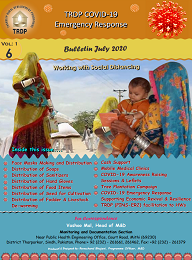
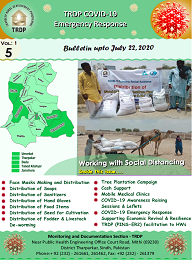
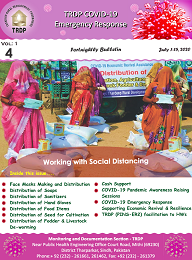
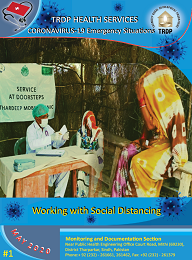
TRDP Emergency Response


TRDP Partners


